If you’re considering solar panels and want a sleek, modern finish, you’ve probably come across in-roof solar panels.
Unlike traditional solar panels that sit on top of your roof tiles, in-roof systems are integrated directly into the roof itself, creating a flush, streamlined appearance. They’re becoming an increasingly popular choice for homeowners across Surrey and Berkshire building a new property, replacing a roof or carrying out a major renovation.
But are they the right option for your home?
In this guide, we’ll explain how in-roof solar panels work, their advantages and disadvantages, how they compare with traditional on-roof systems and whether the additional investment is worthwhile.
What Are In-Roof Solar Panels?
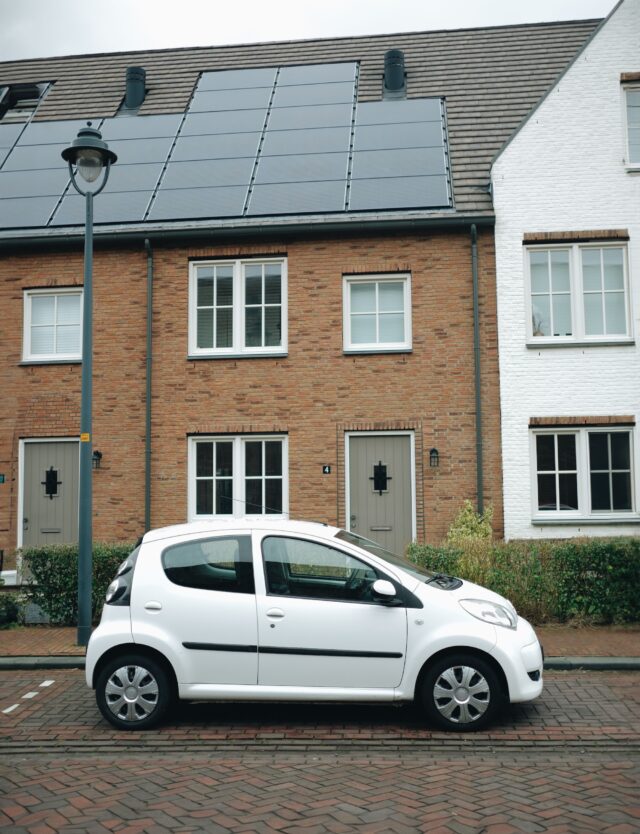
In-roof solar panels (sometimes called integrated solar panels) are designed to replace part of your roof covering rather than being installed on top of it.
Instead of fixing mounting rails above existing tiles or slates, the solar panels become part of the roof structure itself, sitting flush with the surrounding roof covering. This creates a sleek, low-profile appearance that blends naturally with the roofline.
Integrated systems are particularly popular with homeowners looking for a contemporary finish, especially as part of a new build or roof replacement.
In-Roof vs On-Roof Solar Panels at a Glance
Feature
In-Roof Solar Panels
On-Roof Solar Panels
Appearance
Flush with the roof for a seamless finish
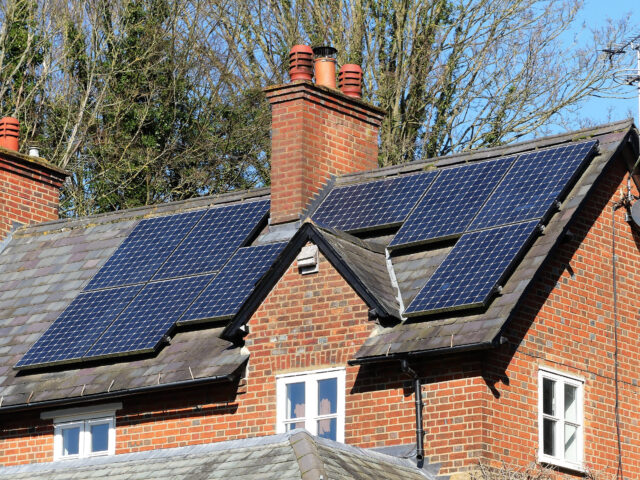
Mounted above existing roof tiles
Best suited to
New builds, roof replacements and major renovations
Existing homes with roofs in good condition
Installation
Integrated into the roof covering
Mounted onto rails above the roof
Upfront cost
Usually higher due to additional roofing work
Generally lower installation costs
Performance
Excellent performance with slightly reduced airflow beneath the panels
Excellent performance with improved airflow beneath the panels
Maintenance
Low maintenance
Low maintenance
Ideal for
Homeowners prioritising aesthetics
Homeowners prioritising value and return on investment
Both systems generate clean, renewable electricity using the same photovoltaic technology. The right choice often comes down to your roof, your budget and whether you’re already carrying out roofing work.
When Are In-Roof Solar Panels Most Suitable?
Although integrated systems can be installed on existing homes, they’re particularly well suited to projects where roofing work is already planned. They are commonly chosen for:
New-build homes
Roof replacements
Loft conversions
Major home renovations
Extensions with new roof structures
Installing solar as part of a wider building project allows roofing and solar work to be coordinated, helping to create a cleaner finish while reducing disruption.
The NHBC Foundation recommends considering renewable technologies early in the design process so roofing details, weatherproofing and installation can be fully integrated into the construction programme.
The Advantages of In-Roof Solar Panels
A Sleek, Contemporary Appearance
For many homeowners, aesthetics are the biggest advantage. Because the panels sit flush with the roof, they create a seamless architectural finish without the raised profile of traditional mounting rails. This makes them particularly attractive on modern homes and contemporary extensions.
If appearance is one of your main priorities, integrated solar panels offer one of the neatest ways to generate renewable electricity.
They Replace Part of Your Roof Covering
Unlike on-roof systems, integrated panels replace the roof tiles within the installation area.
If you’re already replacing your roof, this means two projects can often be completed at the same time, potentially reducing duplicated labour and avoiding future disruption.
Ideal for Renovation Projects
If you’re carrying out a significant renovation, it’s often easier to include solar within the overall project than retrofit it later.
Planning solar from the outset allows installers to coordinate:
This often results in a cleaner installation and greater flexibility.
A Low-Profile Design
Without visible mounting rails, integrated systems create a neat roofline that many homeowners prefer.
This discreet appearance can help solar panels feel like part of the original design rather than an addition to the property.
The Drawbacks to Consider
Higher Installation Costs
One of the main disadvantages is cost. Because in-roof systems become part of the roof itself, installation requires additional roofing work, specialist flashing kits and closer coordination between roofers and solar installers.
If you’re installing solar on an existing roof that’s in good condition, a traditional on-roof system will usually be the more cost-effective option. However, if you’re already replacing your roof, the difference in overall project cost may be much smaller.
This means there is generally less airflow beneath the panels. As solar panels operate slightly more efficiently at lower temperatures, traditional on-roof systems can sometimes achieve marginally higher performance during warmer weather.
That said, the Energy Saving Trust advises that overall system performance is influenced far more by roof orientation, shading and system design than by the mounting method itself.
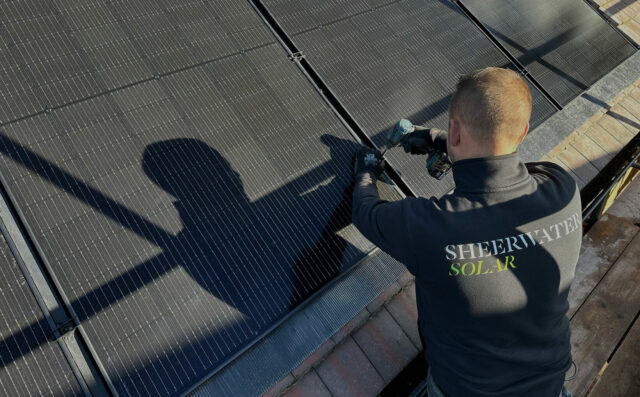
Choosing an MCS-certified installer, like Sheerwater Solar ensures your system is installed to recognised industry standards and gives you confidence that both the roofing integration and electrical installation have been completed correctly.
Integrated systems generally cost more than traditional on-roof installations because of the additional roofing work involved. However, if you’re already replacing your roof, some of those roofing costs are shared across both projects, making integrated solar more cost-effective than installing it separately later.
The best way to understand the likely cost is through a professional home survey and personalised quotation.
Do In-Roof Solar Panels Generate Less Electricity?
Not necessarily. Modern in-roof systems use the same photovoltaic technology as traditional solar panels. The factors that have the greatest impact on electricity generation are:
Roof orientation
Roof pitch
Shading
Panel quality
System size
Although reduced airflow may slightly affect efficiency in certain conditions, the difference is generally small when compared with the influence of roof design and positioning. A well-designed integrated system can still generate excellent amounts of renewable electricity throughout the year.
You’re focused on achieving the quickest return on investment
You’re retrofitting solar to an existing property
Neither option is universally better. The right solution depends on your property, your priorities and your budget.
Why Professional Advice Matters
Choosing between in-roof and on-roof solar panels isn’t simply about appearance. An experienced installer will assess your roof, discuss your renovation plans and recommend the system that offers the best combination of performance, aesthetics and value.
At Sheerwater Solar, every installation is individually designed around your property. Whether you’re planning a new build, replacing your roof or simply exploring your options, we’ll explain the advantages of each system and help you choose the right solution for your home.
Planning a Renovation or New Roof?
If you’re planning a roof replacement, extension or new-build project, it’s the perfect opportunity to explore integrated solar.
Speak to the team at Sheerwater Solar for expert advice on in-roof solar panels. We’ll assess your property, explain your options and design a bespoke solar solution that combines outstanding performance with a beautifully integrated finish.
If you have a solar PV system at home, you might have heard about solar immersion controllers, devices that help you get the most from your system, especially when it comes to hot water efficiency.
An immersion controller monitors your electricity generation and automatically directs surplus...
Reaching out to Sheerwater Solar is straightforward and hassle-free. Whether you’re interested in solar panels for your home or business in Woking, we’re here to guide you every step of the way. You can contact us directly by calling 01932 627 555 or by sending an email to info@sheerwatersolar.co.uk.
Alternatively, fill in our online form for a swift response.
What happens next?
In most cases, we’ll need to conduct an on-site survey at your property to assess the feasibility and provide you with a tailored quote. This visit allows us to understand your specific needs and explore the potential for renewable energy solutions. Following the survey, we’ll discuss the best options for integrating solar energy into your property, including detailed costs and the installation process.
We’re excited to assist you on your journey to renewable energy and look forward to hearing from you.